
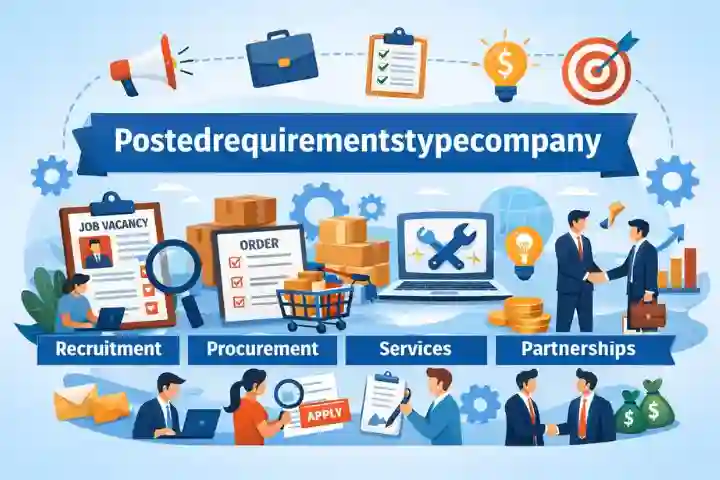
In the modern business world, companies constantly need employees, partners, suppliers, and service providers to complete different tasks and projects. To manage these needs effectively, businesses often share or publish their requirements through structured systems. One concept that represents this organized process is postedrequirementstypecompany.
Although the term may seem unusual at first glance, it reflects a practical business approach. It refers to companies that post their requirements while clearly categorizing them based on type. This helps the right people, vendors, or professionals quickly understand what is needed and respond accordingly.
The concept is becoming increasingly relevant in digital business environments where transparency, speed, and efficiency are essential. In this article, we will explore the meaning of postedrequirementstypecompany, how it works, the different types of requirements, and its importance in modern business operations.
Understanding the Concept of Postedrequirementstypecompany
The term postedrequirementstypecompany can be understood by breaking it into several components:
- Posted – Information that has been shared or published publicly or internally.
- Requirement – A specific need or demand that a company wants to fulfill.
- Type – The category or classification of the requirement.
- Company – The organization that is posting the requirement.
When combined, the term describes a company that posts its requirements along with a clear classification so that the appropriate individuals or organizations can respond.
For example, a company may post requirements related to:
- Hiring new employees
- Purchasing equipment or materials
- Outsourcing services
- Seeking partnerships or investments
By specifying the type of requirement, the company ensures that the request reaches the right audience.
Why Businesses Use Requirement Posting Systems
Businesses operate in complex environments where multiple needs arise simultaneously. Without a structured system, it can be difficult to manage all these requirements effectively.
A postedrequirementstypecompany approach allows organizations to maintain clarity and organization. Instead of informal communication methods, companies use structured postings that clearly explain their needs.
This approach helps in several ways:
- It provides clear communication about business needs.
- It makes it easier for the right people to respond.
- It saves time by reducing confusion and unnecessary communication.
- It improves overall operational efficiency.
Many businesses today rely on digital platforms and management systems to organize and track these posted requirements.
How Postedrequirementstypecompany Works
The process used by companies that follow this approach generally involves several steps.
Identifying the Requirement
The company first determines what it needs. This could be hiring staff, purchasing materials, requesting services, or starting a new project.
Categorizing the Requirement
Once the need is identified, the company assigns it to a specific category or type. This classification ensures the requirement is organized and easily searchable.
Posting the Requirement
The requirement is then published on relevant platforms. These may include company websites, job portals, procurement systems, or internal company networks.
Receiving Responses
After the requirement is posted, interested candidates, suppliers, or partners can review it and submit applications or proposals.
Evaluation and Selection
The company evaluates all responses and selects the most suitable option based on its criteria and goals.
This structured process allows organizations to manage multiple requirements in a clear and efficient manner.
Types of Posted Requirements
One of the most important aspects of the postedrequirementstypecompany system is the classification of requirements. Different categories help businesses organize their needs effectively.
Recruitment Requirements
Recruitment is one of the most common types of posted requirements. Companies frequently post job opportunities when they need new employees.
These requirements may include:
- Full-time positions
- Part-time roles
- Contract jobs
- Freelance opportunities
By categorizing recruitment requirements clearly, companies can attract candidates who match the job requirements.
Product and Procurement Requirements
Many companies need to purchase goods or materials for their operations. Procurement postings allow businesses to request quotes or proposals from suppliers.
Examples include:
- Raw materials for manufacturing
- Office equipment
- Technology hardware
- Software tools
Posting procurement requirements allows suppliers to compete and offer the best solutions.
Service Requirements
Companies often outsource certain tasks to external professionals or agencies. Service requirements may include:
- Marketing and advertising services
- IT support
- Consulting services
- Design and development work
These postings allow companies to find experts who can provide specialized services.
Technical Requirements
Technical postings are common in industries such as information technology, engineering, and manufacturing. These requirements often include detailed specifications such as:
- Software compatibility
- System performance standards
- Hardware configurations
- Security requirements
Providing technical details ensures that vendors or professionals fully understand the scope of the work.
Financial or Partnership Requirements
Some companies post requirements related to financial support or partnerships. These postings may involve:
- Investment opportunities
- Joint ventures
- Strategic collaborations
This type of requirement helps businesses connect with investors or partners who can support growth and expansion.
Importance of Requirement Classification
Classification plays a critical role in the postedrequirementstypecompany system. Without proper categorization, requirements would become difficult to manage.
Requirement types help businesses organize postings according to different criteria such as:
- Industry sector
- Job category
- Project type
- Service category
- Urgency or deadline
This organization makes it easier for people to find relevant opportunities and respond appropriately.
For example, job seekers can filter job postings by industry or employment type, while suppliers can search for procurement opportunities related to their products.
Benefits of Postedrequirementstypecompany
Businesses that implement structured requirement posting systems gain several advantages.
Clear Communication
Detailed requirement postings reduce misunderstandings. Everyone involved clearly understands what the company needs.
Faster Decision-Making
Since requirements are categorized and clearly described, companies receive more relevant responses and can make decisions more quickly.
Improved Efficiency
Structured postings allow businesses to handle multiple requirements simultaneously without confusion.
Better Collaboration
Requirement postings help companies connect with skilled professionals, vendors, and partners from different industries.
Cost Efficiency
By attracting the right responses quickly, companies reduce the time and resources spent searching for solutions.
Real-World Applications
The concept of postedrequirementstypecompany can be seen across many industries.
Technology Companies
Technology firms frequently post requirements for software developers, cybersecurity experts, or system administrators.
Manufacturing Businesses
Manufacturing companies often post procurement requirements for raw materials, machinery, and logistics services.
Marketing Agencies
Marketing firms may post requirements for content creators, designers, and digital advertising specialists.
Construction Companies
Construction projects often require postings for engineers, contractors, equipment suppliers, and safety specialists.
In each of these cases, the company organizes its needs through structured postings so that the right professionals can respond.
Role of Digital Platforms
Modern technology has made requirement posting easier and more efficient. Many companies now use specialized software to manage requirements.
These digital systems allow organizations to:
- Create and publish requirement postings
- Track responses from applicants or vendors
- Manage communication with stakeholders
- Store data for future analysis
Common systems used for this purpose include recruitment software, procurement platforms, project management tools, and enterprise management systems.
These technologies make it easier for companies to maintain organized records of their posted requirements.
Common Mistakes Companies Should Avoid
Even though requirement posting is effective, some mistakes can reduce its efficiency.
Unclear Requirement Descriptions
Vague or incomplete descriptions can lead to irrelevant responses.
Incorrect Categorization
If the requirement type is incorrect, it may not reach the right audience.
Missing Important Details
Important information such as deadlines, budgets, or technical specifications should always be included.
Outdated Listings
Requirements should be removed or updated once they are fulfilled to avoid confusion.
By avoiding these issues, companies can maintain an efficient requirement posting system.
The Future of Requirement Posting
As businesses continue to adopt digital technologies, requirement posting systems will become even more advanced.
Future improvements may include:
- Artificial intelligence for automatic requirement classification
- Smart matching systems that connect companies with suitable vendors or candidates
- Data analytics to predict future business needs
- Automation tools to streamline the hiring and procurement process
These innovations will make requirement management faster, smarter, and more effective.
Conclusion
Postedrequirementstypecompany represents a structured approach to managing business needs. By posting requirements along with clear classifications, companies can communicate effectively with employees, vendors, and partners.
This system helps businesses save time, improve efficiency, and connect with the right people or organizations. As digital tools continue to evolve, structured requirement posting will remain an essential part of modern business operations.
Organizations that adopt this approach can better manage their resources, build stronger partnerships, and respond quickly to new opportunities in the competitive business landscape
Also read : Greblovz2004